Project definition
Clarify household needs, property status, desired size and spaces, priorities, constraints, available documents, and the decisions still required.
 RoadrunnerRemodeling
Abilene, Texas / Custom homes
A custom home should turn the way a household lives into a coordinated plan for rooms, circulation, storage, light, exterior form, and finish. Roadrunner brings that conversation into a residential construction process grounded in real decisions and real project documentation.
The strongest custom-home brief describes daily patterns: where people arrive, gather, work, cook, store equipment, spend time outside, and find quiet. Those priorities help organize the floor plan and give later finish decisions a clearer purpose.
Site conditions, plans, selections, utilities, jurisdiction requirements, and construction sequencing all affect the path forward. The first conversation should identify which facts are known and which still need professional review.
02 / What to consider
Custom-home responsibilities vary by project. Roadrunner confirms the actual preconstruction and construction scope before work begins rather than implying that every service below is automatically included.
Clarify household needs, property status, desired size and spaces, priorities, constraints, available documents, and the decisions still required.
Bring architectural, engineering, site, utility, jurisdiction, and product information into a buildable sequence with responsibilities made explicit.
Coordinate approved site and structural stages, building enclosure, rough systems, interiors, equipment, fixtures, and finish work.
Organize decisions for exterior materials, cabinetry, surfaces, flooring, tile, lighting, plumbing fixtures, hardware, paint, and details.
03 / Plan with context
A custom home contains hundreds of linked choices. A late change can affect plans, ordering, rough work, installation, cost, and schedule. A clear decision sequence helps the household focus on what is needed next without pretending every choice can be made on day one.
Roadrunner's supplied photos include completed exteriors and interiors plus a real framing-stage image. They provide credible visual evidence of residential construction without publishing an unverified location, timeline, or outcome claim.
Property, access, utilities, drainage, surveys, plans, and local requirements may influence feasibility and sequencing. Confirm what applies to the actual site.
Long-lead and dimension-critical items need earlier decisions than decorative details. The project plan should identify those deadlines.
Understand how requested changes are documented and evaluated before they alter ordering or field work. Clear decisions protect the project from avoidable confusion.
04 / Real work
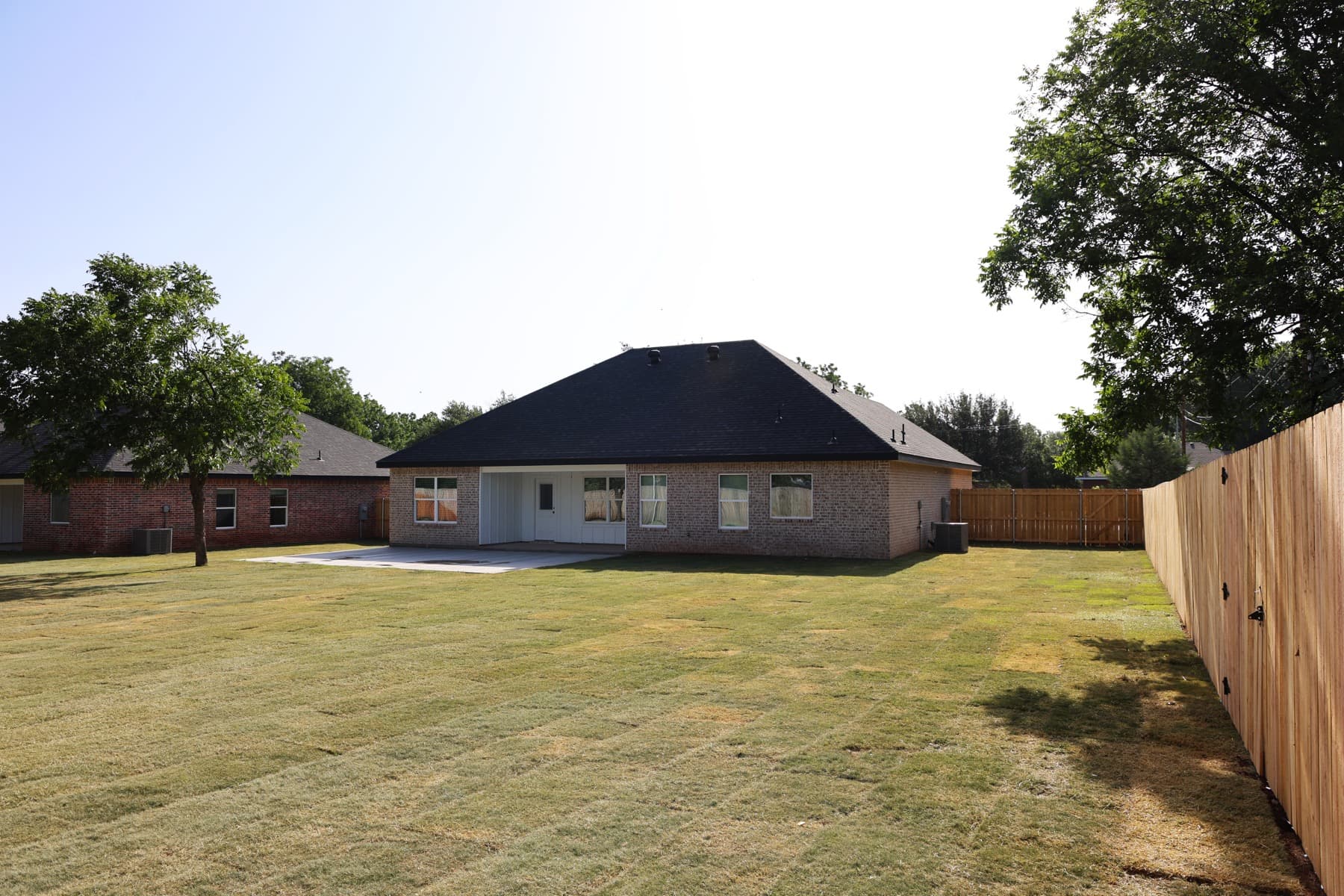
The Roadrunner library pairs a finished rear elevation with framing and interior photography. Together they show construction context and finish range without inventing project facts.
Finished rear exterior from a Roadrunner custom-home project.
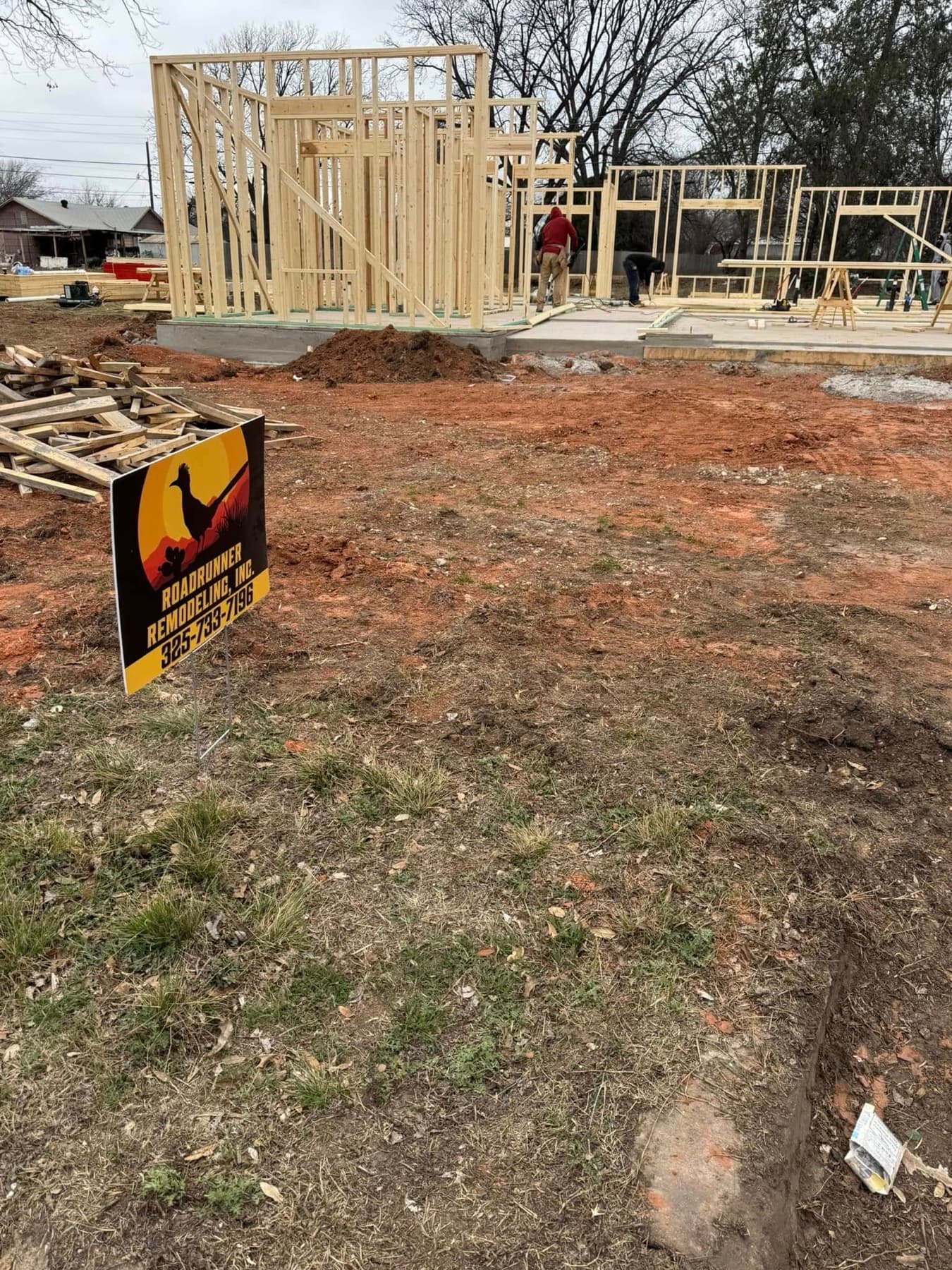
Real Roadrunner construction in progress, documented at the framing stage.
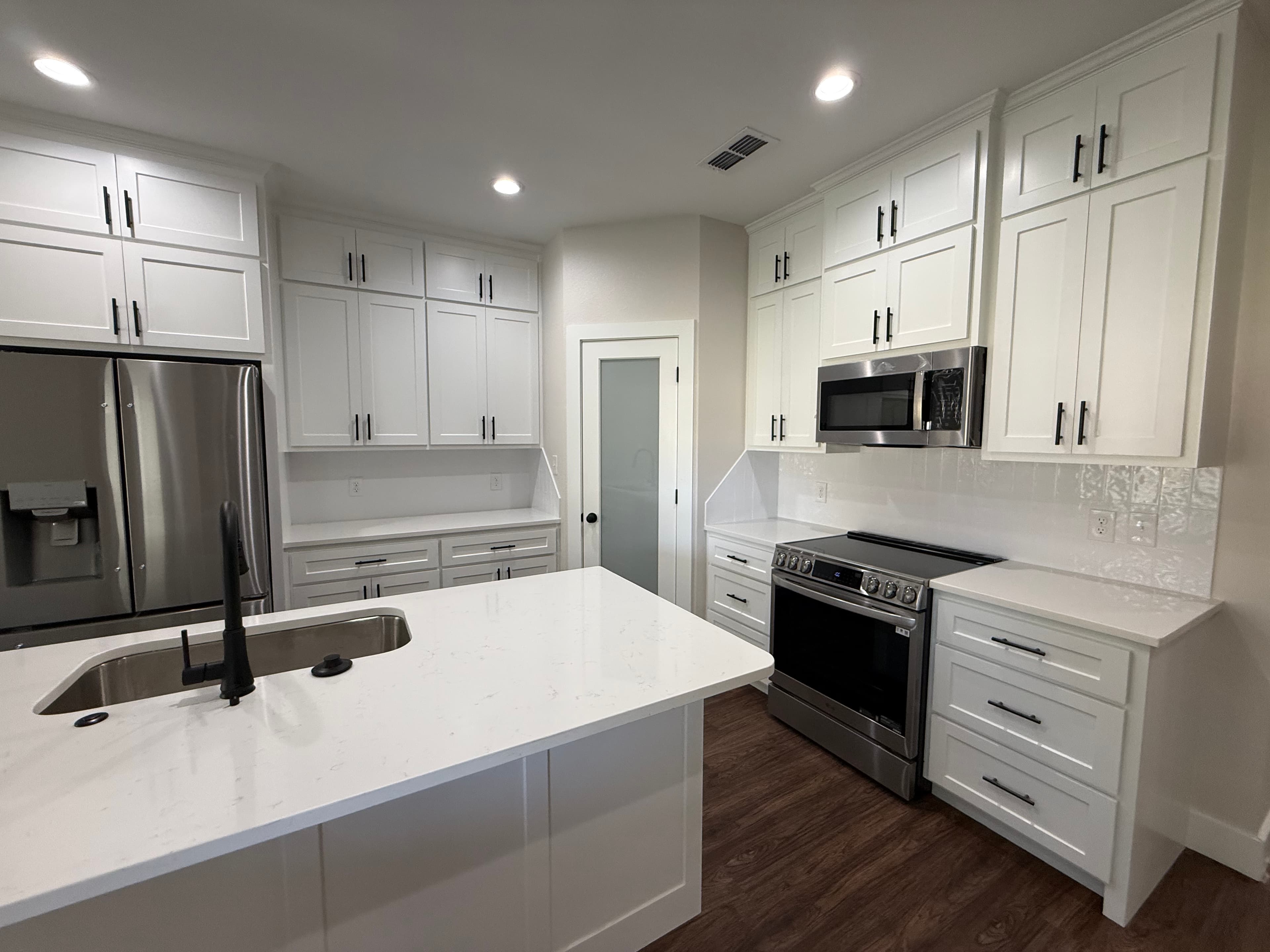
Finished kitchen and island from Roadrunner's real project library.
05 / Roadrunner route
A custom build moves through defined stages, but the specific participants, deliverables, permits, inspections, and contractual responsibilities are confirmed for the individual project.
Discuss the household, property, desired home, available documents, priorities, and unresolved feasibility questions.
Coordinate the approved plans, scope, selections, responsibilities, schedule inputs, and site information needed before construction.
Move through the agreed sequence from early site and structural work to enclosure, systems, interiors, and finish installation.
Inspect the agreed work, address documented completion items, review key home information, and conclude the contracted scope.
06 / Homeowner questions
Early questions for a more productive custom-home consultation.
You can begin a general conversation earlier, but any property-specific feasibility, site cost, utilities, access, or jurisdiction discussion requires accurate information about the actual site. Roadrunner can clarify what is needed for the next step.
Bring any plans, sketches, surveys, inspiration, or product decisions you already have. Roadrunner can review what is available and identify which documents or professional inputs are still needed for a buildable scope.
Selections follow a decision schedule. Exterior assemblies, windows, cabinetry, plumbing, lighting, and other dimension- or lead-time-sensitive items usually need attention before later decorative details.
Plan readiness, site conditions, jurisdiction requirements, utilities, weather, product lead times, selection decisions, requested changes, inspections, and trade sequencing can all influence timing.
Separate non-negotiable functional needs from preferences and future possibilities. Discuss size, room relationships, exterior goals, finish level, and the decisions with the greatest cost or schedule effect early.
Roadrunner Remodeling / Abilene, Texas
Share what you know about the property, the people the home should serve, the spaces that matter most, and the planning work already completed.