New fence layout
Discuss the proposed line, corners, changes in direction or grade, connections, clearances, visibility, and the documentation needed to confirm boundaries.
 RoadrunnerRemodeling
Abilene, Texas / Fencing
Roadrunner helps Abilene homeowners define fence installation and repair around the way the property needs to work—privacy, pets, gates, access, outdoor living, maintenance, and how the fence meets the home and surrounding grade.
A fence is a repeated system, but the exceptions are what make it work: changes in grade, property corners, utilities, gates, equipment access, drainage paths, and transitions to the home or neighboring structures.
The planning conversation should define those moments as clearly as the fence material itself. It should also separate what Roadrunner can visually review from boundaries, easements, or utility information the owner must verify through the appropriate source.
02 / What to consider
Fence types, materials, and exact methods must be confirmed for the project. The early site review focuses on route, function, existing conditions, access, and interfaces.
Discuss the proposed line, corners, changes in direction or grade, connections, clearances, visibility, and the documentation needed to confirm boundaries.
Identify leaning or damaged sections, posts, panels, rails, gates, hardware, finish condition, and whether isolated repair will integrate with the remaining fence.
Plan location, width, swing or operation, clear space, hardware, everyday traffic, equipment needs, and alignment with walks or drives.
Sequence fencing with grading, patios, siding, exterior painting, landscaping, drainage, or construction access when those projects overlap.
03 / Plan with context
Exposure, soil conditions, drainage, grade, post locations, fence height, gate width, and material behavior all affect how a fence performs. The actual design and installation approach should respond to site conditions instead of relying on a one-size-fits-all claim.
Before work, the owner should also confirm property lines, easements, neighborhood requirements, and any required permissions. Utility locating and other safety steps should be coordinated through the appropriate services for the site.
A fence contractor's visual walk is not a land survey. Use reliable property documentation and the appropriate professional when a boundary is uncertain.
Wide gates, slopes, drive approaches, wind exposure, and daily use deserve specific structural and hardware planning.
Compare how the selected material and finish should be inspected, cleaned, adjusted, repaired, or recoated over time.
04 / Real work
A fence is visible in this completed Roadrunner rear-exterior photograph. Because the exact fence scope is not yet verified, it is labeled as context rather than claimed as a standalone Roadrunner fence project.
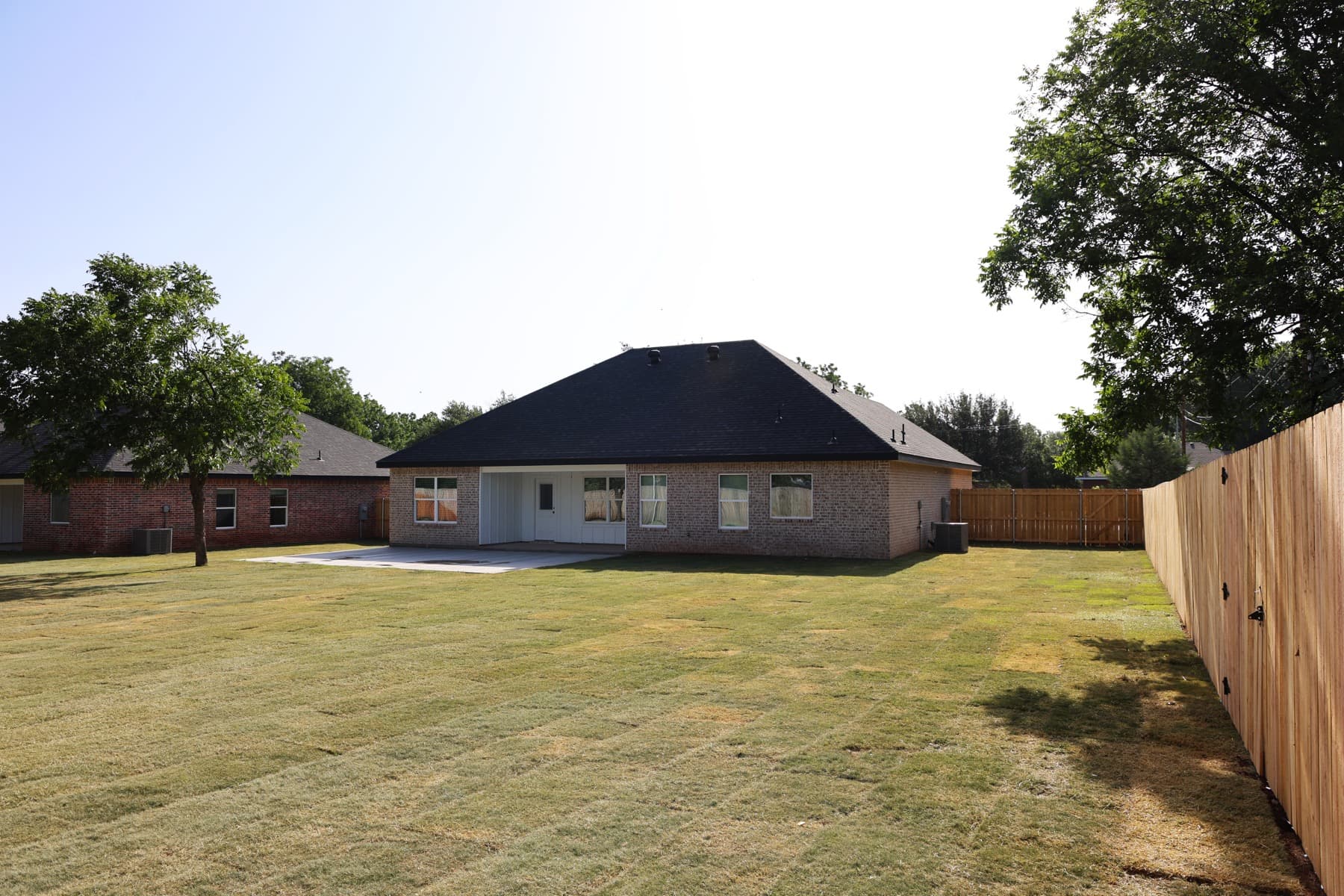
Finished rear exterior from a Roadrunner custom-home project.
05 / Roadrunner route
The fence process is shaped by the verified route, actual material selection, site access, utility information, and any permissions or boundary documentation required for the property.
Discuss function, layout, gates, visible conditions, grade, access, neighboring features, and open property-information questions.
Document agreed material, layout, height, repair boundaries, gates, hardware, finish, removal, access, and owner responsibilities.
Coordinate protection and access, complete the approved removal or repair work, and install the agreed fence and gate components.
Review the visible fence, gates, hardware, transitions, finish, cleanup, and documented completion items.
06 / Homeowner questions
Fence questions to answer before materials arrive.
If the property line is uncertain, reliable boundary information is important before locating the fence. A visual walkthrough does not establish a legal boundary; use the appropriate records or professional support for the property.
Possibly. Post condition, material availability, alignment, finish compatibility, the cause and extent of damage, and the remaining fence's condition all affect whether a partial repair is practical.
Start with the largest regular access need and include clearance for operation, grade, hardware, posts, approaches, and the way vehicles or equipment actually turn into the opening.
Total length, height, material, removal, grade, soil and access conditions, corners, gates, hardware, finishes, existing obstacles, and related property work are common variables.
Yes, where both are part of the approved scope. Planning them together can help preserve construction access and coordinate patios, drainage, siding, exterior paint, gates, and the final property layout.
Roadrunner Remodeling / Abilene, Texas
Share the property's main goal, approximate route, gate and access needs, visible damage, and any boundary or site information already available.