Condition review
Document visible damage, prior repairs, trim and opening conditions, exposure, access, and the areas that may need closer evaluation.
 RoadrunnerRemodeling
Abilene, Texas / Siding + exteriors
Roadrunner helps Abilene homeowners define exterior siding and repair projects around more than curb appeal. The useful questions are where the assembly is failing, how moisture is managed, what adjacent trim and openings require, and whether focused repair or broader replacement makes sense.
Siding meets windows, doors, roof edges, foundations, penetrations, corners, trim, and outdoor living areas. Those interfaces are often where a simple-looking replacement becomes a more detailed construction project.
A site review should distinguish cosmetic wear from conditions that may require further investigation. Roadrunner can then define the visible siding scope without making unsupported promises about hidden conditions.
02 / What to consider
Actual materials and methods must be selected for the home and verified project conditions. Roadrunner's consultation focuses first on the affected elevations and adjacent interfaces.
Document visible damage, prior repairs, trim and opening conditions, exposure, access, and the areas that may need closer evaluation.
Compare a focused repair with broader elevation or whole-home work based on compatibility, extent of damage, finish continuity, and homeowner goals.
Address the proposed assembly at penetrations, openings, horizontal transitions, corners, clearances, and other locations that require coordinated detailing.
Plan how siding, trim, soffit/fascia interfaces, caulk or sealant locations, and coatings meet the rest of the exterior.
03 / Plan with context
Sun, wind, blowing debris, temperature swings, and storm exposure can be hard on exterior finishes in the Big Country. That local reality makes correct clearances, fastening, compatible components, preparation, and finish maintenance important discussion points.
Material claims should be tied to the selected product and its current manufacturer instructions. Roadrunner should confirm the actual product, assembly, and maintenance expectations in the project documents.
A small repair may need to blend with existing profiles and finishes; a larger project creates room to reconsider the exterior composition as a whole.
Windows, doors, vents, utilities, lights, and hose connections all interrupt the wall. Include their trim and transition details in planning.
Discuss what the selected exterior system needs over time, including inspection, cleaning, sealant, coating, and repair considerations where applicable.
04 / Real work
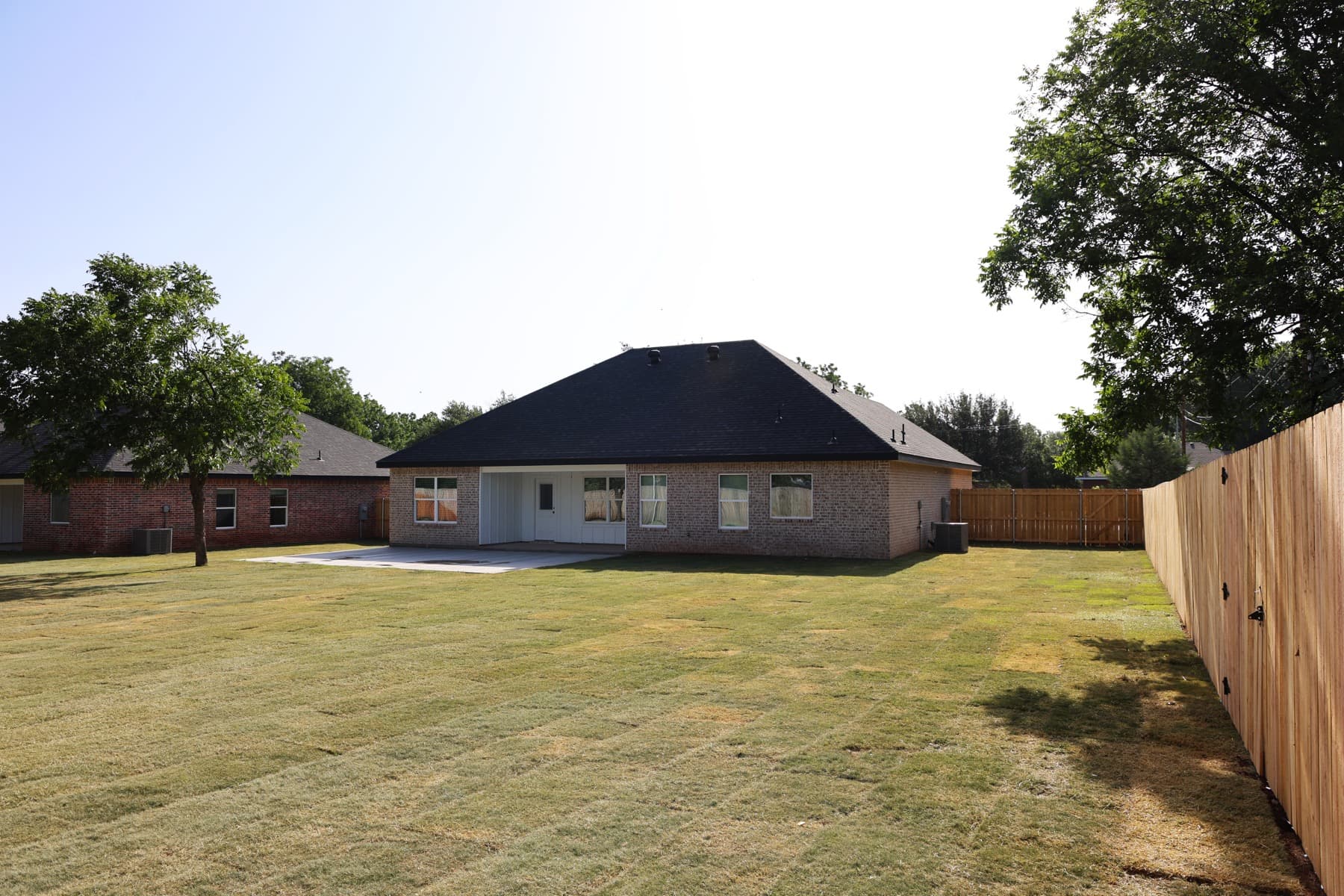
The current library shows a finished Roadrunner home and framing-stage construction. These are honest exterior context—not a fabricated siding before-and-after story.
Finished rear exterior from a Roadrunner custom-home project.
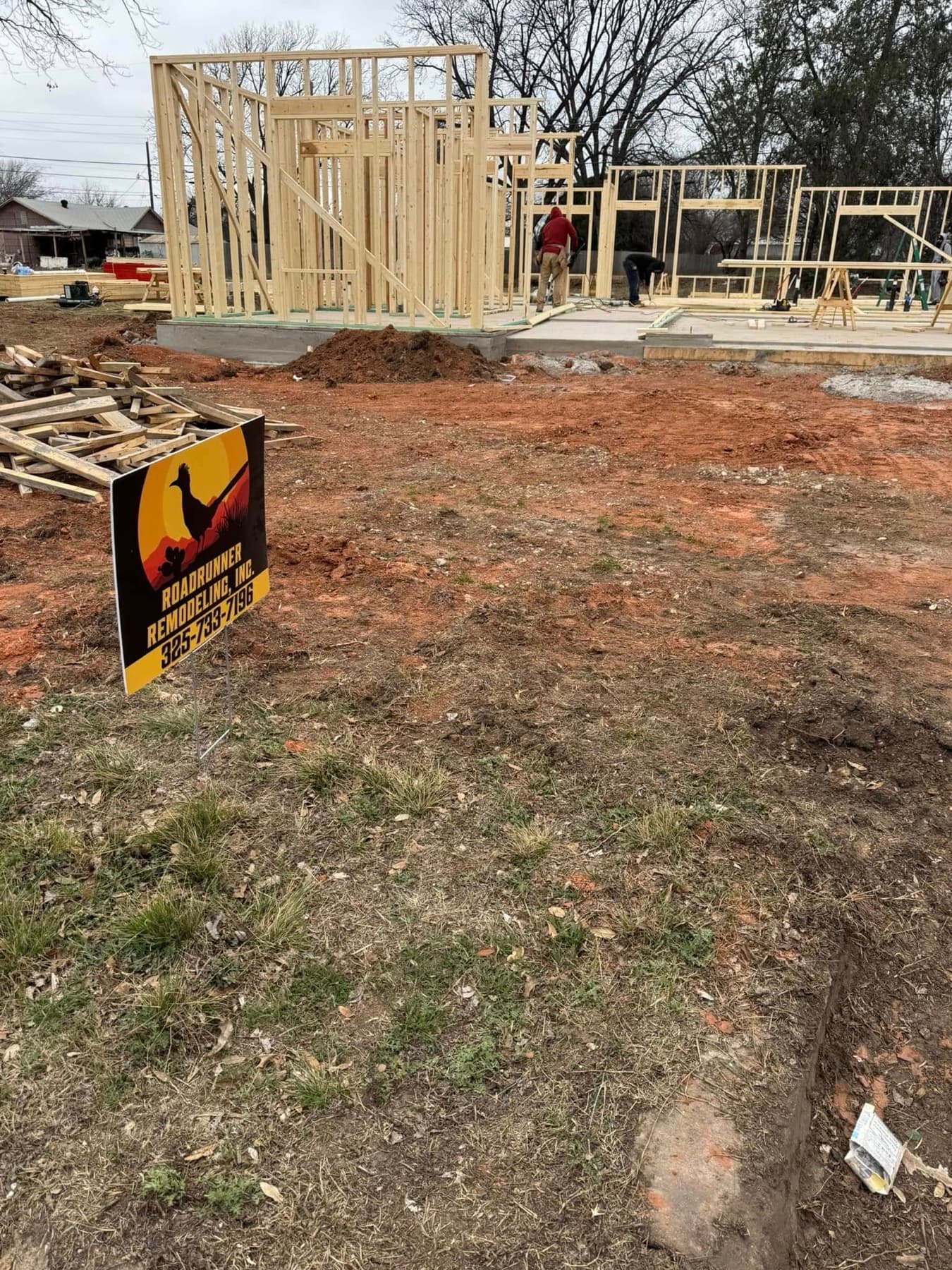
Real Roadrunner construction in progress, documented at the framing stage.
05 / Roadrunner route
The exterior process begins with visible conditions and an agreed repair or replacement boundary. Product-specific installation steps are confirmed after materials are selected.
Identify concerns, document access and visible conditions, and discuss the homeowner's maintenance and appearance priorities.
Confirm affected areas, proposed materials, transitions, trim, preparation, finish work, and conditions that require additional review.
Sequence protection, removal where included, substrate review, installation, trim, penetrations, coatings, and cleanup for the contracted scope.
Review the visible finish, details, touchups, site cleanup, and any documented completion items with the homeowner.
06 / Homeowner questions
Questions that help separate a patch from a larger exterior project.
Sometimes. The extent and cause of visible damage, material availability, profile and finish compatibility, surrounding conditions, and homeowner goals all affect whether a focused repair is practical.
A visual review can identify warning signs, but concealed conditions may not be known until affected materials are opened. The project scope should explain how newly discovered conditions will be documented and evaluated.
If those openings are part of the concern or planned future work, discuss them early. Their dimensions, flashing and trim transitions, and sequencing can affect the surrounding siding scope.
Affected area, access, removal, substrate condition, trim complexity, openings and penetrations, selected system, coatings, disposal, and any repairs discovered during the work are common variables.
Yes, where painting is part of the approved project. Coordinating color, preparation, caulk or sealant locations, and the order of siding, trim, and coating work can create a cleaner result.
Roadrunner Remodeling / Abilene, Texas
Describe the affected elevations, visible damage, previous repairs, and whether your priority is repair, maintenance, or a broader exterior update.